

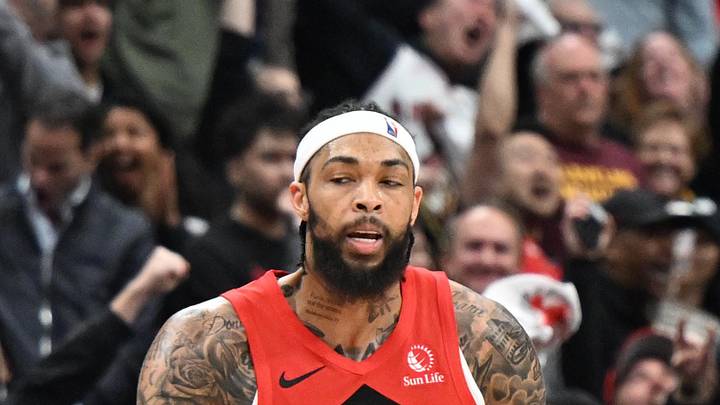
The Raptors have officially finished their first full season with Brandon Ingram on the roster. For the most part, Ingram has been a resounding success for Toronto.
He made his second career All-Star Game and led the fifth-seeded Raptors in scoring. Maybe his most impressive accomplishment was his durability. Ingram played, by far, the most minutes of his career in a single season and appeared in 77 games, his most since his rookie year.
Unfortunately for Ingram and the Raptors, that durability did not extend to the postseason. He battled a heel injury throughout Toronto’s first-round series against Cleveland and missed the final two games. With the unfortunate ending to Toronto’s season, it raises a difficult question: how much can the Raptors trust Ingram to be healthy when it matters most?
Ingram wears the regrettable “injury-prone” label
I would never condemn a player for getting injured. It is not Ingram’s fault that his heel was hurt late in the season and affected his play during the playoffs. That being said, it can be risky to build around players who consistently deal with injuries. Ingram falls into that category.
The NBA recently implemented a 65-game cutoff for players to be eligible for end-of-season awards. The argument is that if a player misses more than 17 games, they have not played enough to reasonably qualify. In Ingram’s 10 NBA seasons, he has met that 65-game threshold twice.
What is notable about Ingram’s long injury history is that, for the most part, it has been made up of smaller injuries. He has frequently dealt with sprains, strains, and soreness. Again, this is not about blaming Ingram. It is about Toronto being careful when building around a player who has consistently struggled to stay healthy.
How should Toronto build for the future?
It is premature to advocate for Toronto to move off Ingram.
The Raptors’ pass-heavy offensive system allowed him to have his lowest usage percentage in seven years. That is likely part of the reason he was able to stay healthy for most of the regular season. It also makes it possible that his uncharacteristically healthy season is sustainable.
But if the Raptors face similar issues with Ingram next postseason, then it may be worth reconsidering his long-term place in Toronto. As good as Ingram’s individual scoring was for the Raptors’ offense, this team needs go-to options it can trust to be available when the playoffs arrive.
None of this is to blame Ingram. It is just the reality of trying to build an NBA contender.
 Add us as a preferred source on Google