

The 2024 offseason was a big one for Immanuel Quickley and the Toronto Raptors. It marked the start of a five-year marriage between the two sides, with IQ locked in as a Raptor until the 2029 offseason. When Quickley signed his five-year, $162.5 million contract, most of the NBA world viewed it as a massive bet. IQ, at 25, was still unproven and had spent most of his career as a backup, but he had the shot-making and playmaking skills that projected to fit perfectly alongside Scottie Barnes.
To this point in time, that gamble Toronto took hasn’t aged well, and look away, Raptors fans, because it’s only getting worse.
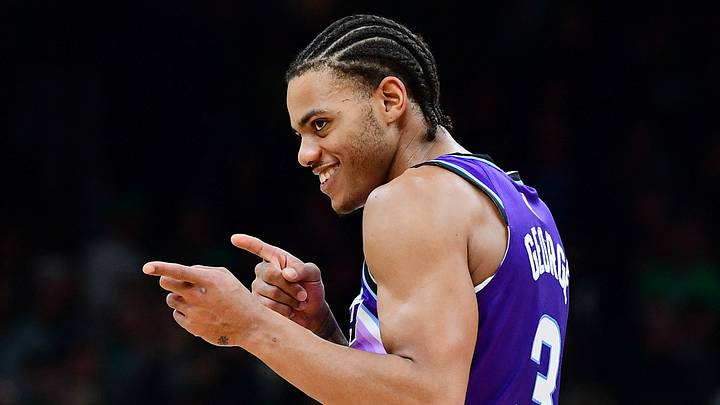
We are at the point in the NBA offseason where front offices are starting to look at rookie extensions, and the Utah Jazz just locked in Keyonte George to a fresh five-year deal. George signed a $157.5 million deal to keep him in Utah with an AAV (average annual value) of $31.5 million per season. Yes, the Jazz locked their 22-year-old franchise point guard into a cheaper deal than the one Toronto handed to IQ two summers ago, with an AAV of $32.5 million.
IQ's contract is aging in the wrong direction
Not only is this a bad look for the Raptors because of the way the cap has gone up since 2024, but Utah is paying a player in a similar spot Toronto was with IQ less money two years later. But George is also further along in his development and, in my opinion, projects as the better lead guard.
Last season, George was in All-Star conversations, averaging 23.6 points, 3.7 rebounds, and 6.1 assists per game while shooting 37.1 percent from three in his third NBA season. IQ, on the other hand, averaged 16.4 points, 4.0 rebounds, and 5.9 assists per game while shooting 37.5 percent from three. Obviously, the immediate counterpoint here is that George has the ball in his hands more and put up these stats on a losing team, which is totally fair. George's usage rate last season was nearly seven percent higher than IQ’s.
But whether you’re on the same side of the street as me and think George projects to have a higher ceiling down the road or not, the fact he’s set to make less than Quickley is wild. Since the 2024 offseason, the cap has gone up nearly 18 percent and jumped up nearly $25 million, and somehow the Jazz still ended up paying less than Toronto for their franchise PG.
This isn’t one of those situations where you compare a center's contract to a guard's, or two players with opposite skill sets, to one another. George and IQ have a ton of similar traits. Both are high-volume scoring guards, good playmakers who can run an offense, and have major shortcomings on the defensive end. And somehow the Jazz are set to pay the player who is younger and, in my eyes, has much higher upside long term than IQ, who just had his second straight injury-riddled season.
Oh, and here's the kicker: George could've been a Raptor in that 2023 NBA Draft, but Toronto opted for Gradey Dick at No. 13 instead.
 Add us as a preferred source on Google