

The Toronto Raptors have had an interesting week since the last Fulcrum.
They went 1-2, but the record alone does not tell the full story. Toronto picked up what may have been its best win of the season against the Oklahoma City Thunder, followed by two second-half collapses against Eastern Conference rivals in the New York Knicks and Orlando Magic. Those three games raised some important questions about this team as it heads into the next stretch of the season.
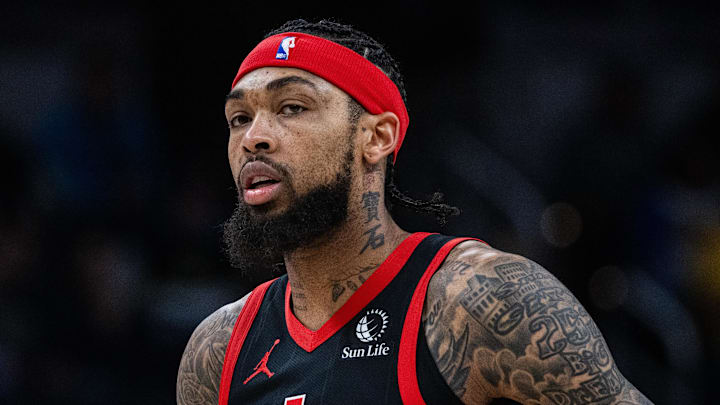
What is Brandon Ingram’s impact on winning?
This is a question I have been thinking about for some time, but one I have been hesitant to ask. On paper, Ingram is having an excellent season, leading the team with 21.9 points per game on good efficiency. His ability to create his own shot is something this Raptors offense has desperately needed.
However, outside of scoring, Ingram does not consistently contribute in many other areas of the game. That contrast stood out this week. Ingram’s worst offensive performance came against the Thunder, when he scored just 13 points on 18 field-goal attempts. Toronto still won that game behind a gritty, collective defensive effort.
By comparison, Ingram was outstanding offensively against the Knicks and Magic, averaging 31 points while shooting 59 percent from the field. But, Toronto lost both games.
On the season, the Raptors have actually performed 1.3 points per 100 possessions better with their leading scorer off the floor. Again, that metric alone does not tell the full story, but it does raise questions about how Ingram’s individual offense fits within the team’s broader system. While his scoring is valuable, the tendency for the ball to stick in his hands and his inconsistent defensive intensity are worth monitoring.
Watching the games this week, those concerns became more pronounced.
RJ Barrett is still getting his footing back
RJ Barrett has now played four games since returning from an ankle sprain.
In those games, he has averaged 13.5 points, 5.8 rebounds, and 3.3 assists while shooting 39.6 percent from the field. Before the injury he suffered against the Brooklyn Nets on November 23, Barrett was averaging 19.6 points per game and shooting over 50 percent from the field. Toronto also performed considerably better with Barrett on the floor during that stretch.
For the Raptors to make noise in the second half of the season, they will need Barrett to recapture his early-season form. A healthy Barrett gives the team another ball handler, another scoring option, and allows the offense to diversify. Barrett has missed 23 of the team’s last 32 games, so it is understandable if he needs time to find his rhythm.
Still, the Raptors will be hoping that process does not take too long. But if Toronto also needs a reason to shake things up, rethinking RJ Barrett's role on the team could be their answer.
The schedule gets slightly easier
Toronto has just finished a stretch in which it played six of seven games on the road, including a five-game Western Conference road trip and two matchups against teams close to them in the Eastern Conference playoff race. Overall, it was a successful stretch, but it likely took a significant amount of energy out of this young group.
The Raptors now begin a five-game homestand against the Jazz, Timberwolves, Bulls, Pacers, and Pistons. While there will still be challenging matchups, the overall level of competition is lower than what Toronto faced in recent weeks. Just as importantly, this stretch at home presents an opportunity for the Raptors to rest and continue reintegrating Barrett.
 Add us as a preferred source on Google