

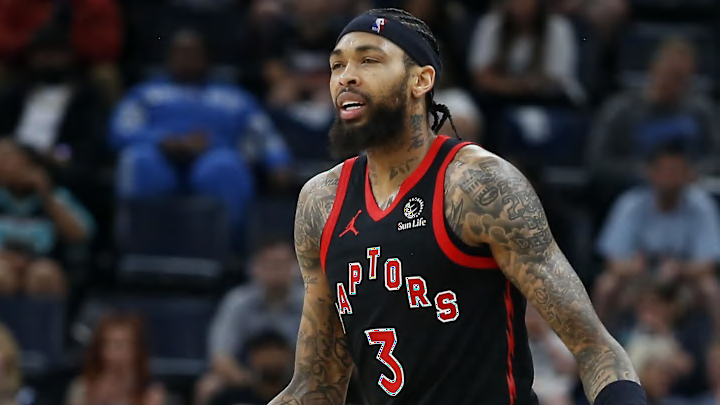
The Toronto Raptors are now down 0-2 to the Cleveland Cavaliers after dropping Game 2 of the first round series on April 20 in a final score of 115-105.
Following this Game 2 defeat, I think no Raptors player is on a higher red alert than Brandon Ingram.
It's been a rough Raptors postseason effort from Brandon Ingram thus far
After Game 1 showcased a modest Brandon Ingram effort, the post-game discussions centered on Toronto's utilization of their All-Star wing, who definitely needed to be shooting the ball more than nine times. In Game 2, Ingram certainly delivered on that front, but to no avail.
He finished with just seven points on a dismal 3-for-15 shooting performance (a 20 percent clip). In fact, as per NBA statistician Keerthika Uthayakumar on X, Ingram's 23.3% true shooting percentage was "the worst mark by a player with 15+ FGA in Raptors playoff history, passing DeMar DeRozan's 24.0 TS% in 2016."
Ingram also finished with five turnovers and a plus/minus of -16 in the contest.
While this team is still very much centered on the leadership of Scottie Barnes, that doesn't mean the Raptors' other All-Star is any less vital. This team thrives on a balanced attack, and without a doubt, the player who should be leading the offensive charge for Toronto is Brandon Ingram — he was the Raptors' leading scorer this season, after all.
The recipe seemed simple following Game 1: feed Ingram, find him better looks, and encourage him to take the right shots. But in Game 2, we saw that adjustment made, and for one reason or another, Ingram simply wasn't able to deliver.
Here is where I will play a bit of devil’s advocate. As disheartening as it was to see Ingram have such a historically rough outing, I don’t see it as the nail in the coffin for his prospects in this series. While a sense of panic in the aftermath of Game 2 is understandable, we shouldn't forget the effort Brandon Ingram put in during the regular season to help Toronto get to this point.
Head Coach Darko Rajakovic was quick to back his star in the post-game presser, where he said: "Brandon is a very important player for us. The ball did not go in tonight. We need him to continue being aggressive and shooting. I have absolute support for him. He's going to make his shots."
The issue moving forward is that we’ve seen two extreme sides of the Brandon Ingram spectrum. If Ingram is too passive and not doing enough, it’s an issue. If his shot output increases, but the efficiency and winning impact take a hit, then that’s an even bigger problem. So, how do the Raptors adjust and find a system that maximizes Ingram’s ability to influence winning?
Keep the faith and remind yourselves that this team secured 46 wins in the regular season for a reason. It wasn’t a flawless campaign, and Ingram certainly had his deficiencies, but there is an avenue for his style of play to flourish and for the Raptors to raise their hands in victory.
He doesn’t need to take fewer shots; rather, the concern is that he’s struggled against the likes of Dean Wade, Max Strus, and Sam Merrill — guys he should be outclassing purely from a talent perspective. For Toronto to survive, the star needs to start playing like the star. Ingram also cannot be having five turnovers, so cleaning up that area will be a key point of emphasis to start with (a red flag I specifically highlighted before the postseason began).
Ingram must hark back to his regular season form, or he becomes the latest chapter in Toronto’s history of postseason dread.
 Add us as a preferred source on Google