

Raptors fans were clamoring for the team to make a move at the trade deadline. Toronto was connected to big names across the league, from Domantas Sabonis to Ja Morant. The team responded with… Trayce Jackson-Davis.
Many Raptors fans understood the risks involved with cashing in major future assets to pursue one of the biggest names on the market. But there is a large gap between a blockbuster trade and doing almost nothing.
My favourite potential target was a guard in Chicago: Ayo Dosunmu.
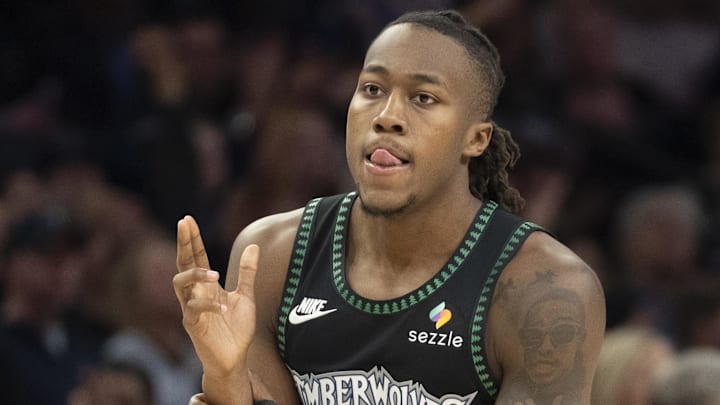
While Toronto stayed quiet, the Minnesota Timberwolves traded for Dosunmu. The price was reasonable for a high-end backup guard entering free agency and did not even require a first-round pick.
Since the trade, Dosunmu has given Minnesota exactly what Toronto could have used: secondary playmaking, additional ball handling, and consistent three-point shooting.
Looking at how the Raptors have performed since the trade deadline only makes the missed opportunity more apparent.
Toronto needed a backup guard
Dosunmu would have slotted into the backup shooting guard role alongside Jamal Shead and Ja’Kobe Walter. He could have eased the playmaking burden on Shead while giving Walter a veteran presence as he battles inconsistency.
Without that support, the backup guard rotation has struggled since the deadline. Jamal Shead has lost a significant step, and while Ja'Kobe Walter has been more productive, he isn't quite suited to reliably fill the playmaking gap.
Minnesota needed Dosunmu. Toronto did too.
Dosunmu has played 18 games for Minnesota so far. In that span, he has averaged 13.2 points, 3.3 assists, and just 1.2 turnovers, while shooting 52.5% from the field and 42.9% from three. Those are strong numbers for a backup guard and still slightly below what he averaged in Chicago.
Minnesota desperately needed a reliable guard to manage possessions when Anthony Edwards left the floor. Dosunmu has filled that role.
Toronto needed someone to fill a similar role. The Raptors do not have a primary offensive engine like Edwards, which means the burden of playmaking falls heavily on the point guard rotation. Right now, the only point guards in the Raptors’ rotation are Jamal Shead and Immanuel Quickley.
Since the trade deadline, Toronto has outscored opponents by an average of 3.1 points per 100 possessions. With Quickley on the floor, that number is still a solid to +2.7. With Shead on the floor, it drops to -1.2.
A rotation featuring Quickley, Dosunmu, and Shead would have given Toronto multiple playmakers to turn to when one struggles. Without a player like Dosunmu, the Raptors are left hoping Shead can break through his sophomore wall.
Conclusion
Trading for one of the biggest stars on the market was never the right move for Toronto. But the roster clearly needed another reliable ball handler. Ayo Dosunmu was available for a reasonable price, and the Raptors ultimately chose not to make that move.
A Dosunmu trade would not have tipped the championship scales. It could have filled a glaring hole in the guard rotation and helped stabilize Toronto’s offense down the stretch.
The front office instead stuck to its plan of keeping the core together while developing its young players. Time will tell if that was the right approach.
Instead, Toronto is now watching Dosunmu play meaningful minutes for another playoff team while the Raptors continue searching for consistent guard play.
 Add us as a preferred source on Google