

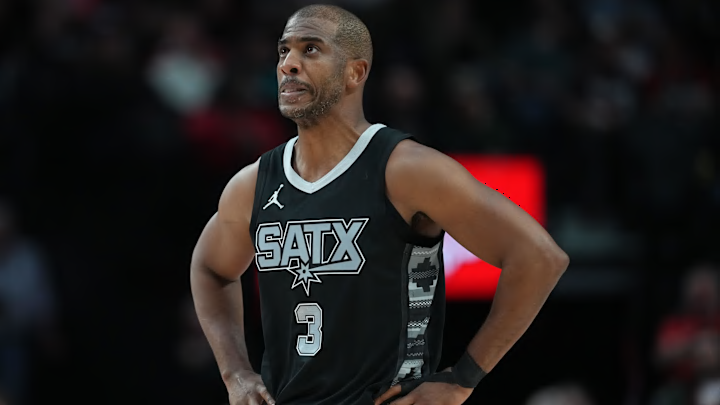
In a surprising move, Toronto traded Ochai Agbaji and a 2032 second-round pick for Chris Paul. On paper, the move looks reasonable. In practice, Toronto is expected to waive Paul before he ever reports, turning the deal into a pure salary-dump transaction.
When paired with Toronto’s later deal with the Golden State Warriors, sending a 2026 second-round pick for Trayce Jackson-Davis, the Raptors effectively turned two second-round picks and Agbaji into Jackson-Davis. That is not a terrible deadline outcome.
Many expected Toronto to be one of the teams making a bigger splash at the trade deadline, given its movable contracts and control of all future first-round picks. Instead, the front office chose restraint, making marginal moves to improve depth while also dipping below the luxury tax. I am a strong believer in that approach. This was not the time for Toronto to cash in future assets to chase short-term gains.
What I do question is the decision to make Chris Paul the vehicle for that salary dump.
Why Chris Paul?
If Toronto was unwilling to move one of its higher-impact contributors, then Agbaji became its most useful salary-matching asset. The Raptors were also roughly $1 million over the luxury tax, making a cost-cutting move inevitable.
Given those constraints, Toronto had options. They could have traded Agbaji for a younger, unrefined player on a minimum contract. They also could have targeted a veteran expected to actually play rotation minutes. Instead, Toronto acquired Paul, a player they intend to waive, gaining no on-court value from the transaction itself.
Ironically, I would have liked the idea of trading for Paul if the intention was to actually keep him. Even at this stage of his career, Chris Paul could have stabilized bench units, added another ballhandler, and allowed Immanuel Quickley to lean into a more natural combo-guard role. That version of the move makes basketball sense. Trading for him only to waive him does not.
Conclusion
At the end of the day, this trade makes logistical sense for Toronto. The Raptors dip below the luxury tax at the lowest possible cost, a single second-round pick. They gain no on-court value from the transaction, but not every move needs to be an overwhelming win.
The front office clearly prioritized financial outcomes, and that approach is understandable given that the team does not project as a championship contender this season. Still, it is fair to wonder whether a more creative trade could have allowed this version of the roster to improve, even marginally.
This is a small move that does not damage Toronto’s long-term goals. It simply feels like a missed opportunity to extract a bit more value.
 Add us as a preferred source on Google